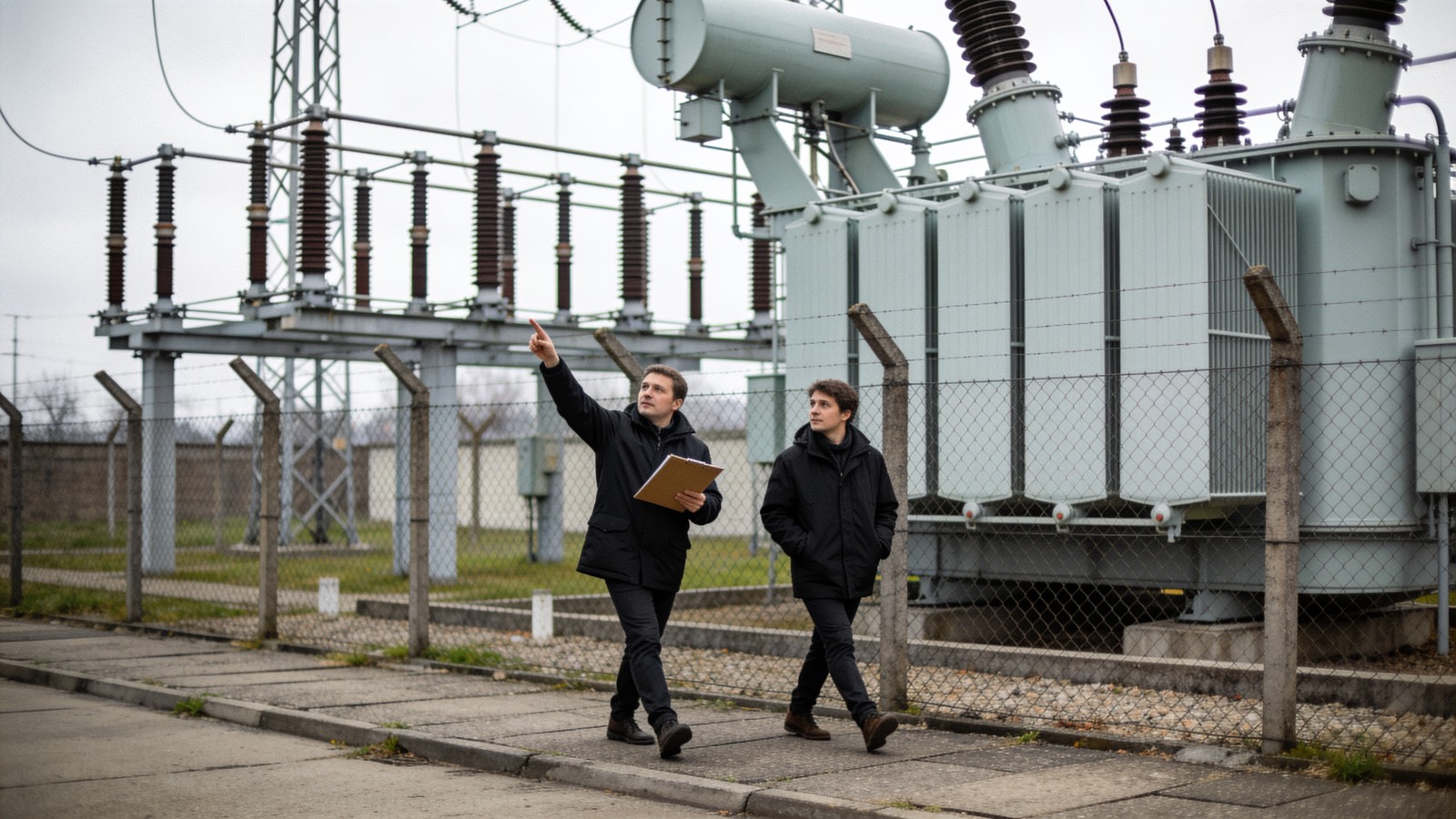
Why every site needs its own concept
Every site is different. Approach routes, sight lines, lighting, staff positions and operating hours vary. A concept for detection and reporting only holds up if it knows the actual terrain. Concepts from manufacturers have an additional drawback. They are usually built around the product the manufacturer wants to sell.
How it works
Preliminary call. We clarify the occasion, past incidents and your existing procedures.
Walk-through. We walk your site, by day and on request after dark. We check approach routes, sight lines, staff positions, lighting, parking areas, cameras and fences. We talk to the guards.
Risk picture. We describe which drone scenarios are likely for this site, what they would mean and how much warning time would remain.
Site concept. We write down which measures on the ground help. We assess whether detection technology makes sense and which kind, without ties to any manufacturer and with a cost range. Added to this: the reporting chain for this site, content for the duty instructions and requirements for a possible tender.
Outcome
A concept of about 15 to 25 pages. It contains a site plan, the risk picture, a list of measures ranked by effort and effect, the reporting chain and instructions for the guards. We close with a review meeting with the people in charge.
What it does not include
The site assessment contains no product recommendation. We receive no commissions from manufacturers. If detection technology makes sense, we name the kind of technology and support you through the tender.
Who it is for
Operators of factories, substations, power plants, data centres, warehouses, stadiums, hospitals and prisons. Also security providers who want to present a concept to their clients.